API
-
Working with Queues in the Collections Framework
The queue data structure can be useful in algorithms where you need to process data in a sequential order. A queue contains the elements in the order they were added, that is, elements…
-
The Collections interface
The Collections interface is the root interface extended by most collection types and defines common methods for all collection types. Interfaces and concrete implementations of a list, set and queue will inherit these…
-
Spring Data
When an application requires interaction with a database, that often means implementing a considerable amount of boilerplate code which, over time, becomes difficult to maintain. Spring data eliminates boilerplate code and abstracts database…
-
Streams API
The Streams API creates a sequence of items and iterates through data collections by collapsing iterations into more efficient and readable code. There are multiple ways to create a stream instance from a…
-
Enterprise Java Beans (EJB)
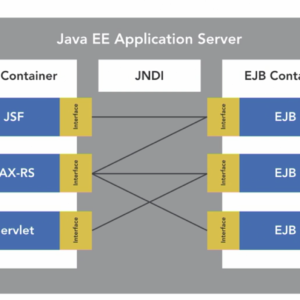
Enterprise Java Beans (EJBs) is an API within the Java EE specification that provides a standard component architecture for building object-oriented business applications. EJBs are reusable Java objects or POJOs that run in…
-
Java Servlet API
The Servlet API is an important feature in building Java web applications. Servlets run in a servlet container which is a web or application server that provides network services for receiving requests and…
-
Java Persistence API (JPA) ~ Part 2 ~ Entity Manager
The entity manager API is used to create and remove entity instances, find entities by their primary key and to query entities. JPA defines a persistence unit in the persistence.xml file which caters…
-
Java Persistence API (JPA) ~ Part 1 ~ The basics
What is persistence? Applications are designed to store and manipulate data in a remote datasource/database so that it can be retrieved, processed, transformed or analyzed at a later time. Persistence refers to the…