-
Object-oriented programming concepts in Java
Inheritance in Java Inheritance is a way of defining relationships between classes and supports easier debugging and maintenance. A class can inherit and extend functionality from a single direct superclass. The extends keyword…
-
-
Structural Software Design Patterns
Structural design patterns are a way of structuring code to make it more maintainable and flexible by re-using solutions to common problems. The idea stemmed from the book “Design Patterns: Elements of Reusable…
-
Elastic Beanstalk
Elastic Beanstalk is a fully managed service from AWS that supports the deployment and scalability of web applications and services. Elastic Beanstalk is free and only the resources used to store and run…
-
Enterprise Java Beans (EJB)
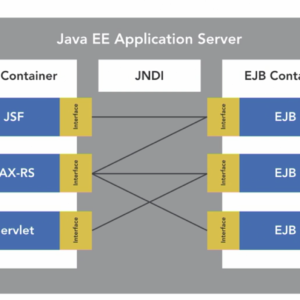
Enterprise Java Beans (EJBs) is an API within the Java EE specification that provides a standard component architecture for building object-oriented business applications. EJBs are reusable Java objects or POJOs that run in…
-
Algorithms
What is an algorithm? An algorithm is a way of solving well specified computational problems. – Cormen et al. A finite set of rules that give a sequence of operations for solving a…
-
Java Enterprise Edition
Java EE is an umbrella specification that contains a set of interoperable API specifications that support the development of enterprise systems with Java. Java EE provides higher-level abstractions for common system concerns. Goals…
-
Java Servlet API
The Servlet API is an important feature in building Java web applications. Servlets run in a servlet container which is a web or application server that provides network services for receiving requests and…
-
Java Persistence API (JPA) ~ Part 2 ~ Entity Manager
The entity manager API is used to create and remove entity instances, find entities by their primary key and to query entities. JPA defines a persistence unit in the persistence.xml file which caters…