-
Enterprise Java Beans (EJB)
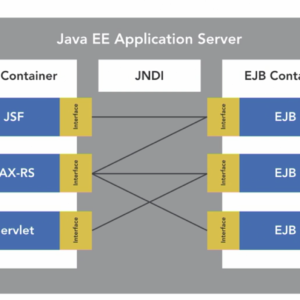
Enterprise Java Beans (EJBs) is an API within the Java EE specification that provides a standard component architecture for building object-oriented business applications. EJBs are reusable Java objects or POJOs that run in…
-
Algorithms
What is an algorithm? An algorithm is a way of solving well specified computational problems. – Cormen et al. A finite set of rules that give a sequence of operations for solving a…
-
Java Enterprise Edition
Java EE is an umbrella specification that contains a set of interoperable API specifications that support the development of enterprise systems with Java. Java EE provides higher-level abstractions for common system concerns. Goals…
-
Static vs. non-static methods
If you want to use a method without creating an instance of that class, static methods are the way to go. If your method is related to an instance’s attributes, it should be…
-
Inversion of control in Spring
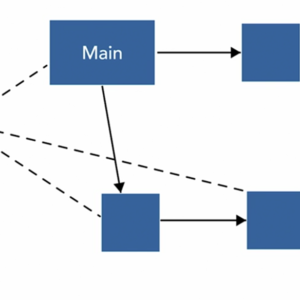
In Inversion of Control (IOC), the container itself maintains the class dependencies and manages the lifecycle of those dependencies. Objects are injected as dependencies when required at runtime or at application startup as…
-
Spring Data JPA
Spring Data JPA provides a common set of interfaces based on Java Persistence API (JPA) leveraging method naming conventions to derive data access behaviour using JPA and Hibernate which provides aspected behaviour. Practically,…
-
Java Objects & Classes
An object contains data and the behaviors of a single concept. The way we represent objects and how we use them are defined in classes therefore objects are an instance of a class…
-
Java Primitive Variables
Java classifies data with data types based on its value. Because Java is a static language, all variables have types that are set when the variable is declared and once set, the variable’s…